


How to Clean an Oxygen Concentrator: A Safe Home Checklist
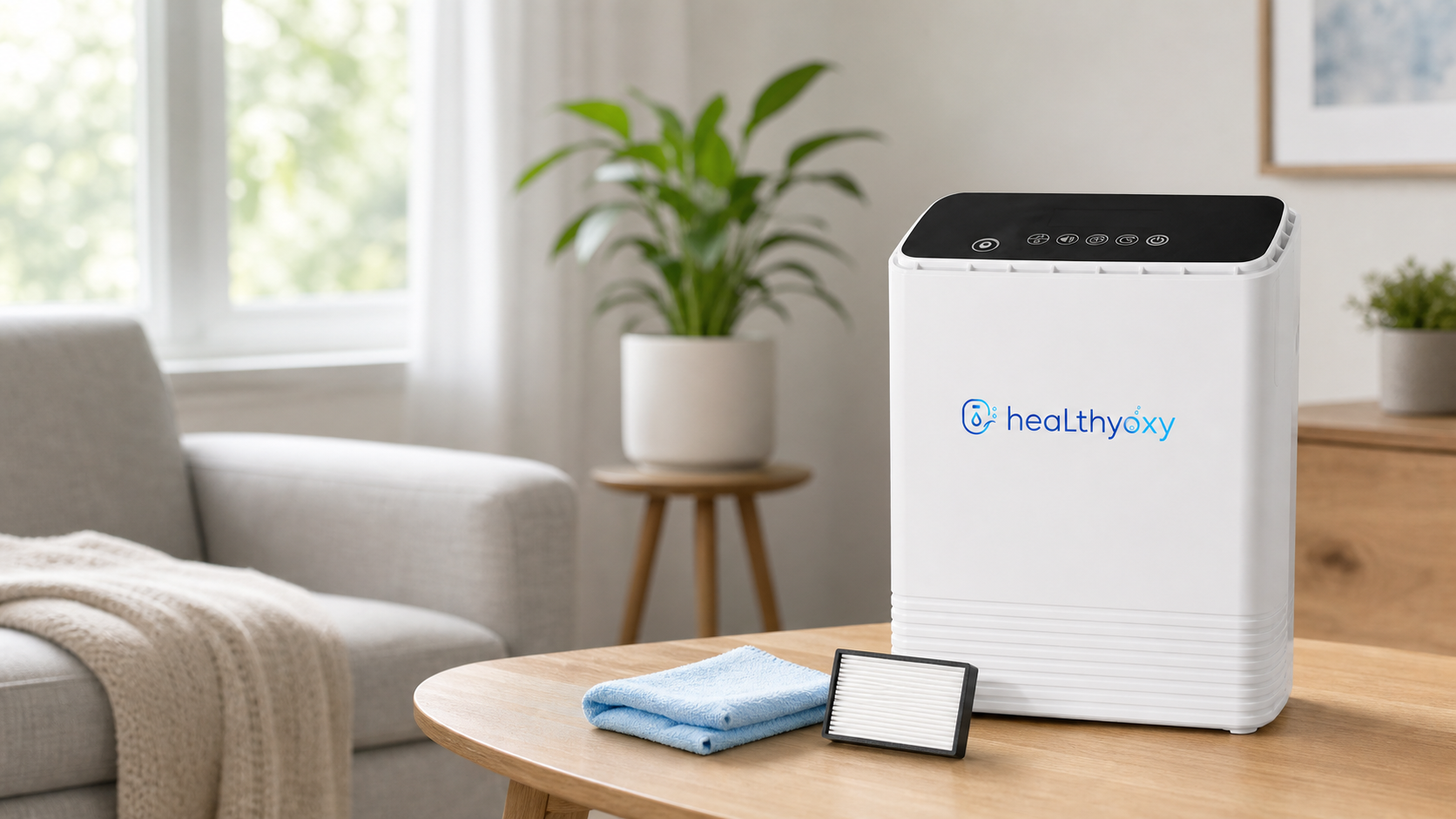
Learning how to clean an oxygen concentrator can help keep routine home care organized, but the exact steps and replacement schedule depend on the machine, accessories, oxygen prescription, and supplier instructions. Use this checklist as a planning guide—not as a replacement for the device manual, clinician, or oxygen supplier.
Medical safety note: Oxygen is a prescription treatment. Do not change the flow setting or modify equipment unless your clinician or oxygen supplier tells you to do so. If breathing worsens or the equipment alarms and you cannot correct the issue using the manual, follow your emergency plan.
Before cleaning: make the area safe
Wash and dry your hands. Move away from flames, smoking, candles, gas stoves, sparks, and heat sources. Oxygen does not burn by itself, but it makes other materials burn more readily.
Unless the manual says otherwise:
- Switch the concentrator off.
- Disconnect it from wall power.
- Keep liquids away from vents, sockets, controls, and internal components.
- Gather a clean, soft cloth and the supplies approved by the manufacturer.
- Confirm which filters are user-serviceable. Some filters should be cleaned; others must be replaced by the supplier.
Never open the machine housing or service internal parts unless you are trained and authorized.
Cleaning the exterior
Wipe the outside with a clean cloth that is only lightly damp, using the cleaning solution permitted by the manual. Do not spray liquid directly onto the concentrator. Do not allow moisture to enter air inlets or outlets.
Remove dust from around the vents without pushing debris inside. The machine needs space for airflow, so keep it away from curtains, walls, bedding, and clutter according to its clearance instructions.
Let every cleaned surface dry before reconnecting power.
Cleaning or replacing the inlet filter
Filter design varies widely. First identify the filter in the manual and determine whether it is washable, disposable, or supplier-serviced.
For a washable filter, follow the manufacturer’s sequence. This commonly involves removing it while the machine is off, washing gently, rinsing thoroughly, and allowing it to air-dry completely before reinstalling. Never return a damp filter to the concentrator. Do not run the device without a required filter unless the manual explicitly permits it.
Disposable filters should not be washed. Replace them at the specified interval or when instructed by the supplier. If the filter is torn, heavily soiled, or will not seat correctly, call for support.
Cannula and tubing care
The American Lung Association advises cleaning the nasal cannula regularly and replacing it according to clinician or supplier guidance. Follow the exact instructions that came with your setup because tubing and cannula materials differ.
Keep the cannula off the floor and store it in a clean, dry place when it is not being used. Inspect tubing for kinks, cracks, water, discoloration, or loose connections. Do not use petroleum jelly, oil, grease, or other petroleum-based products near oxygen equipment.
If tubing has been contaminated, damaged, or used during an illness, ask the oxygen supplier whether it should be replaced rather than cleaned.
Humidifier bottle care
Only use a humidifier bottle if it is part of the prescribed setup. Use the type of water and fill level specified by the supplier or device instructions. Empty, wash, rinse, and refill it on the recommended schedule. Do not top up old water indefinitely.
Keep water from backing into the tubing or concentrator. If moisture appears where it should not, stop and contact the supplier.
A practical maintenance schedule
Your manual is the final authority, but a written checklist can prevent missed tasks:
| Timing | Check |
|---|---|
| Every day | Look for alarms, blocked vents, kinked tubing, damage, and unusual noise |
| Regularly | Wipe the exterior and clean the cannula as instructed |
| Weekly or manual-defined | Inspect the user-serviceable filter and humidifier bottle |
| Supplier-defined | Replace cannula, tubing, disposable filters, and other consumables |
| Any time performance changes | Contact the supplier; do not alter the prescribed flow |
Record the date when filters and accessories are cleaned or replaced. A small label or phone reminder makes the schedule easier to follow.
Cleaning after illness
Ask the clinician or supplier whether accessories should be replaced and which disinfectant is compatible with the equipment. Do not improvise with bleach, alcohol, essential oils, aerosol sprays, or scented cleaners unless the device instructions specifically approve them.
Clean hands before touching the cannula and avoid sharing oxygen accessories with another person.
When to call the oxygen supplier
Contact the supplier when:
- an alarm continues after the manual’s basic checks;
- oxygen tubing or connectors are damaged;
- a filter cannot be cleaned or replaced correctly;
- the machine has been exposed to liquid;
- output seems different or symptoms worsen;
- the concentrator smells hot, makes a new sound, or repeatedly shuts down;
- you are unsure which cleaning product or replacement part is approved.
Do not wait for routine maintenance if the machine is not working normally. Use the backup plan established with your care team.
For planning beyond maintenance, see the home oxygen concentrator buying guide and oxygen concentrator versus oxygen tank.
Fire and household safety reminders
Post “No Smoking” signs where oxygen is used. Keep the concentrator and tubing away from open flames, smoking materials, heat sources, and flammable products. Do not place the unit under clothing or bedding. Ensure smoke alarms work and that household members understand the emergency plan.
Keep the power cord where it will not create a trip hazard, but do not use an extension cord unless the manufacturer explicitly allows it. If power outages are possible, review how to prepare for a power outage when using an oxygen concentrator.
Frequently asked questions
Can I spray disinfectant on an oxygen concentrator?
Do not spray the machine directly. Liquid can enter vents and electrical components. Use only the method and product approved in the manual or by the supplier.
Can I put a wet filter back in?
No. A washable filter should be completely air-dried before reinstalling. If oxygen is needed while it dries, ask the supplier about the approved backup arrangement rather than running the unit incorrectly.
How often should I replace the nasal cannula?
Replacement timing depends on the cannula, usage, condition, and supplier guidance. Replace it sooner if it is damaged, contaminated, stiff, or no longer fits correctly.
Can I change the oxygen flow while cleaning?
Do not change the prescribed flow setting. Turn off and unplug the device for external cleaning when the manual directs, then restore the prescribed setup. Contact the care team if you are uncertain.
The bottom line
Safe oxygen concentrator cleaning means following the exact manual, keeping liquids outside the machine, fully drying washable filters, caring for accessories on schedule, and escalating alarms or performance changes to the supplier. A repeatable checklist supports the equipment; it does not replace medical guidance or a backup oxygen plan.